

Uma faca de ar comprimido é frequentemente escolhida quando uma linha de produção precisa de um sopro forte e direcionado em um espaço limitado. Ela se conecta ao ar comprimido da fábrica e transforma esse ar e...
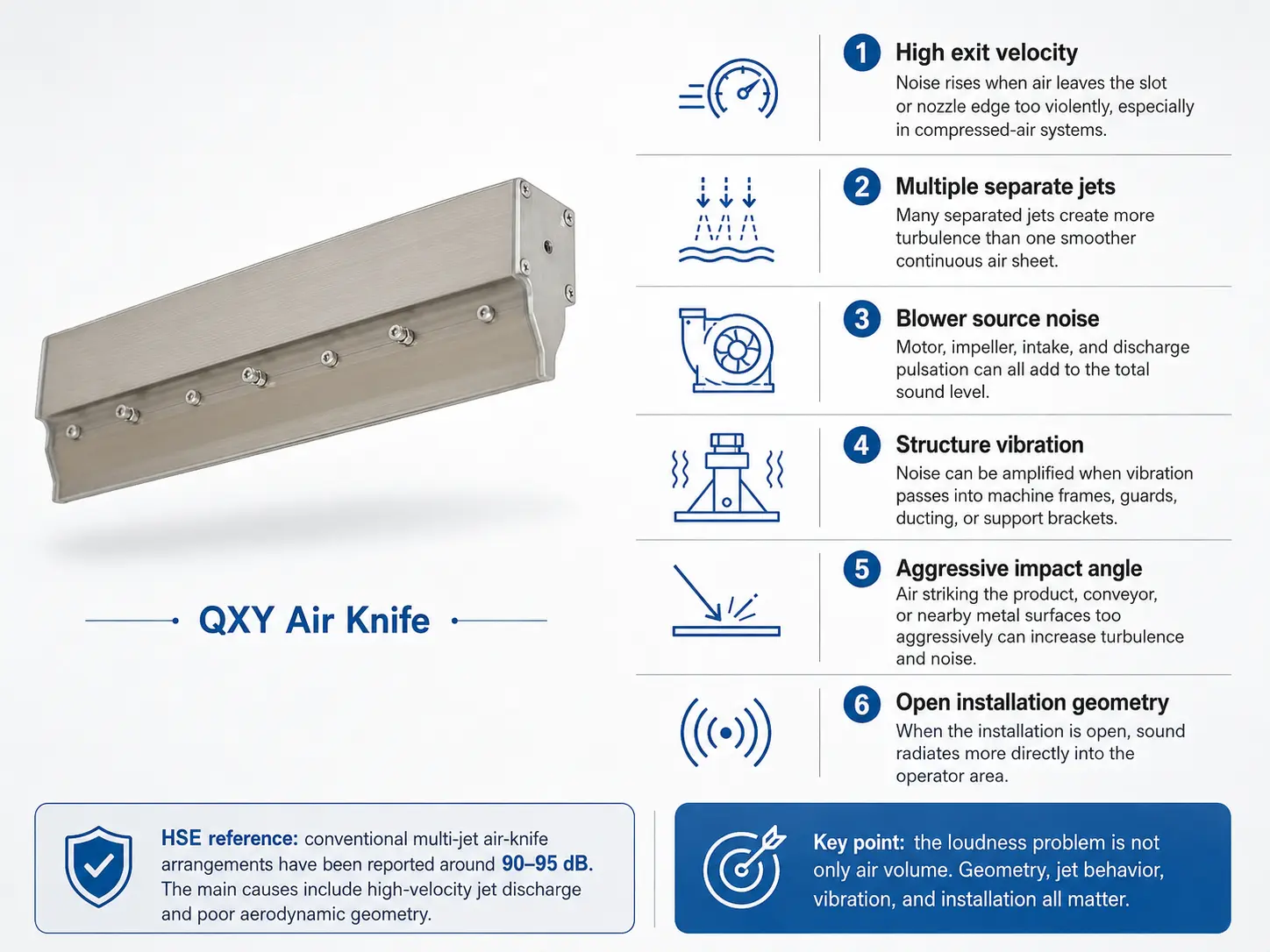
Por que os sistemas de lâmina de ar se tornam barulhentos em linhas rápidas?Em uma linha de produção lenta, o excesso de ar pode parecer apenas um desperdício. Em uma linha de alta velocidade, muitas vezes se t...
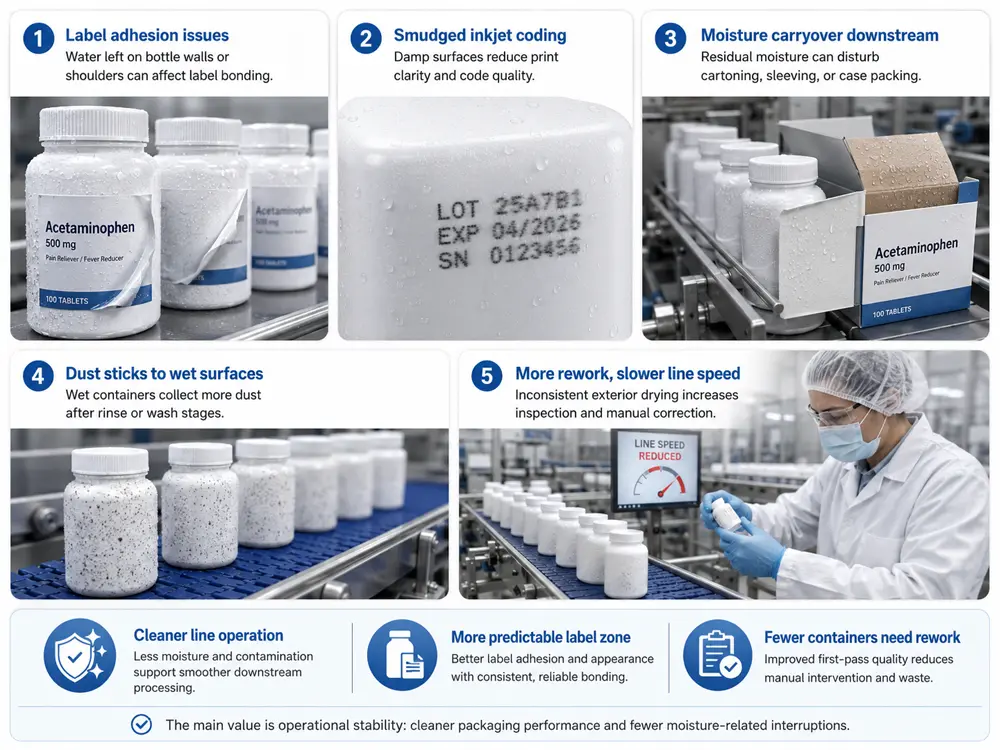
Por que a secura e a limpeza são importantes nas linhas de embalagem farmacêutica?As linhas de embalagem farmacêutica processam produtos que exigem apresentação impecável, codificação legível, rotulagem confiáv...
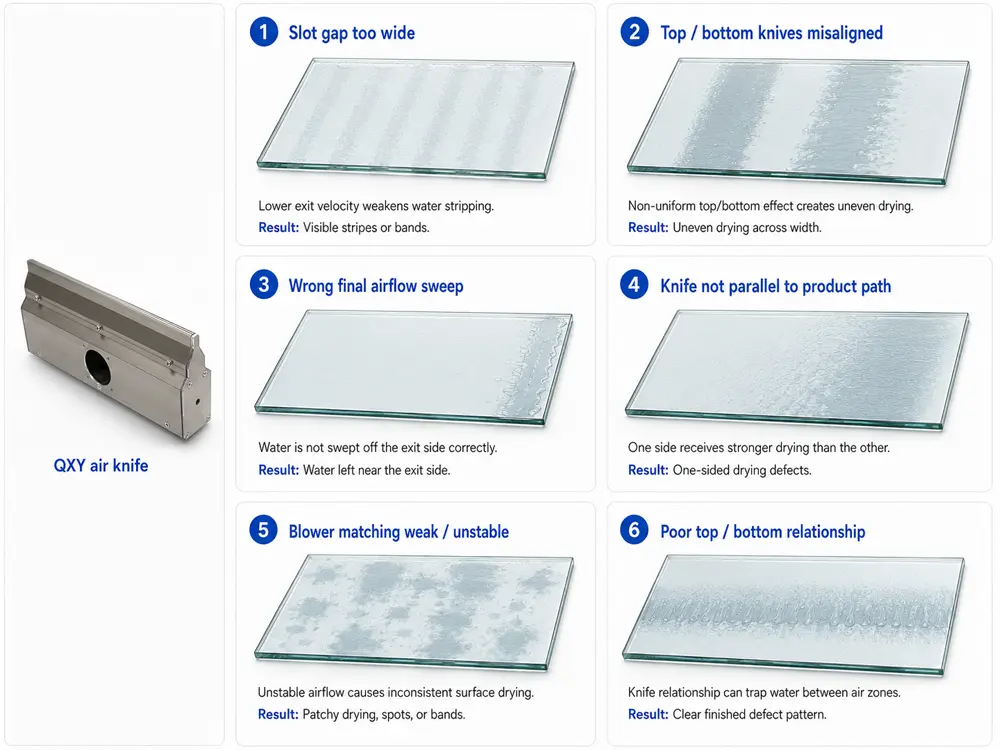
Por que aparecem manchas de água mesmo quando o jato de ar está funcionando?Muitas equipes de produção presumem que, uma vez instalado ojato de ar, o vidro sairá da linha de produção completamente seco e transp...
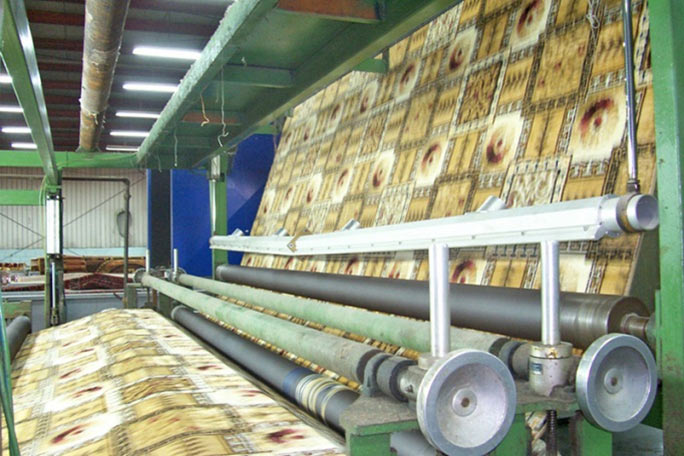
Por que o controle de poeira é importante antes do primeiro ponto de impressãoA poeira que atinge a zona de impressão faz mais do que deixar a superfície com aparência suja. Ela pode criar manchas brancas, falh...
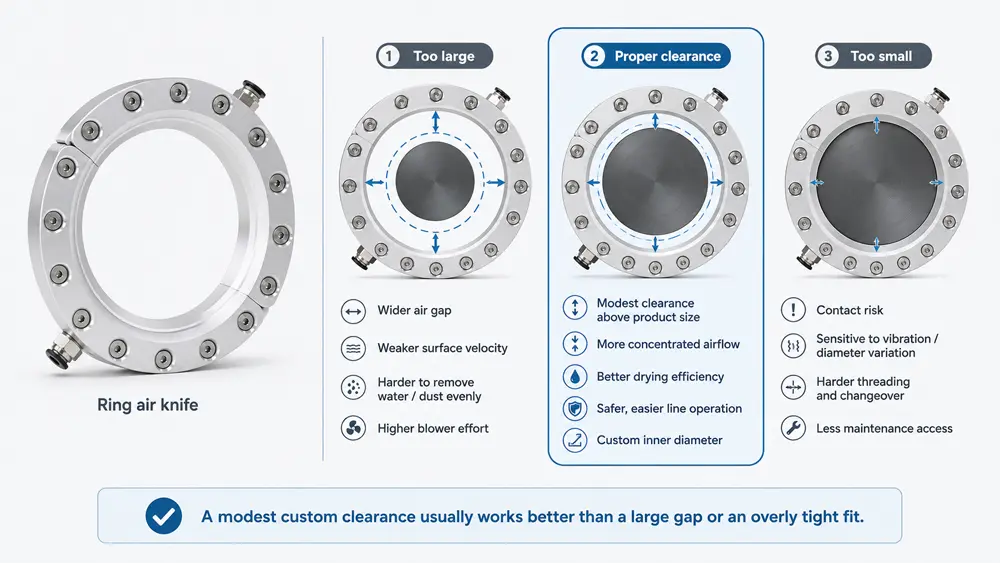
Por que o diâmetro do anel é tão importante em produtos redondos?Umafaca de ar anularé projetada para uma tarefa que uma faca de ar reta não consegue realizar bem sozinha: fornecer um fluxo de ar equilibrado de...
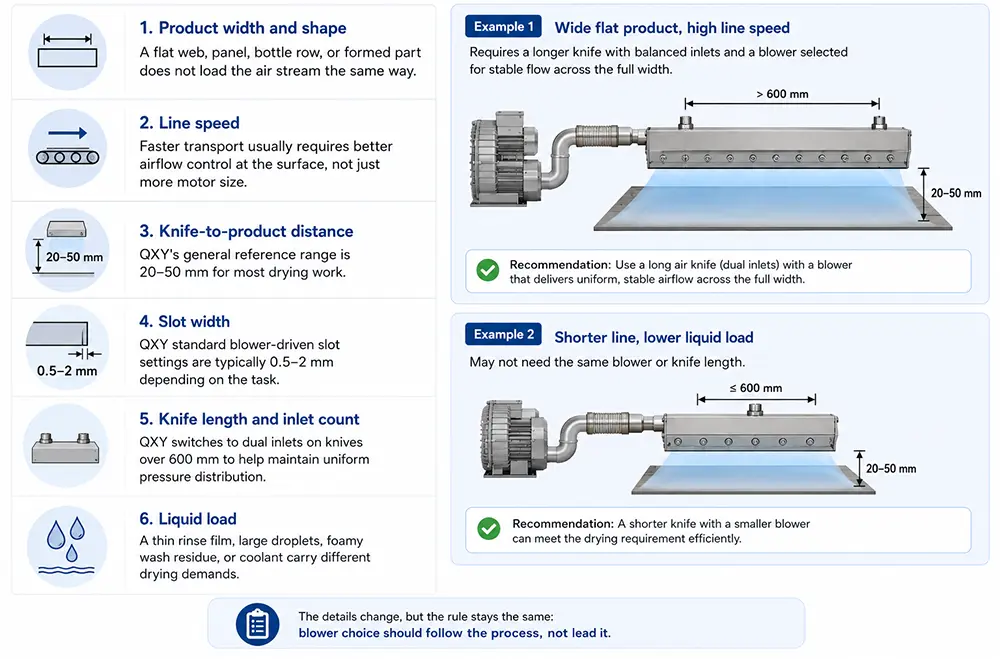
Por que a escolha do soprador é mais importante do que muitos compradores imaginam.Em muitas linhas de produção, a secagem deficiente com faca de ar é atribuída primeiramente à própria faca. Presume-se que a ab...
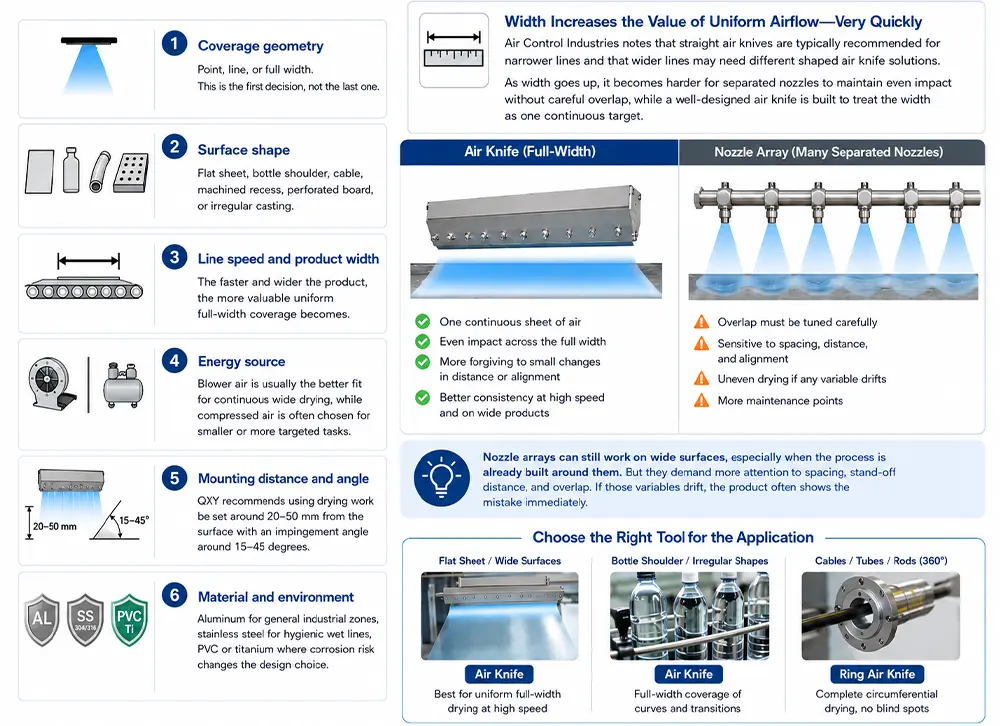
Por que essa comparação é importante em linhas de produção reaisAs fábricas não comparam ferramentas pneumáticas por razões acadêmicas. Elas as comparam porque as etiquetas estão falhando, a codificação está bo...

Shenzhen Qixingyuan Machinery Equipment Co., LTD.
info@airknifecn.com
Edifício 8, Terceira Zona Industrial de Wanfeng, Rua Xinqiao, Distrito de Bao'an, Shenzhen, Guangdong, China