


AirKnifebody itself. Water sits on a rough surface. Product residue catches around a weld. Cleaning chemicals attack a low-grade material. Dust collects on a ledge close to the conveyor. The air knife may still...
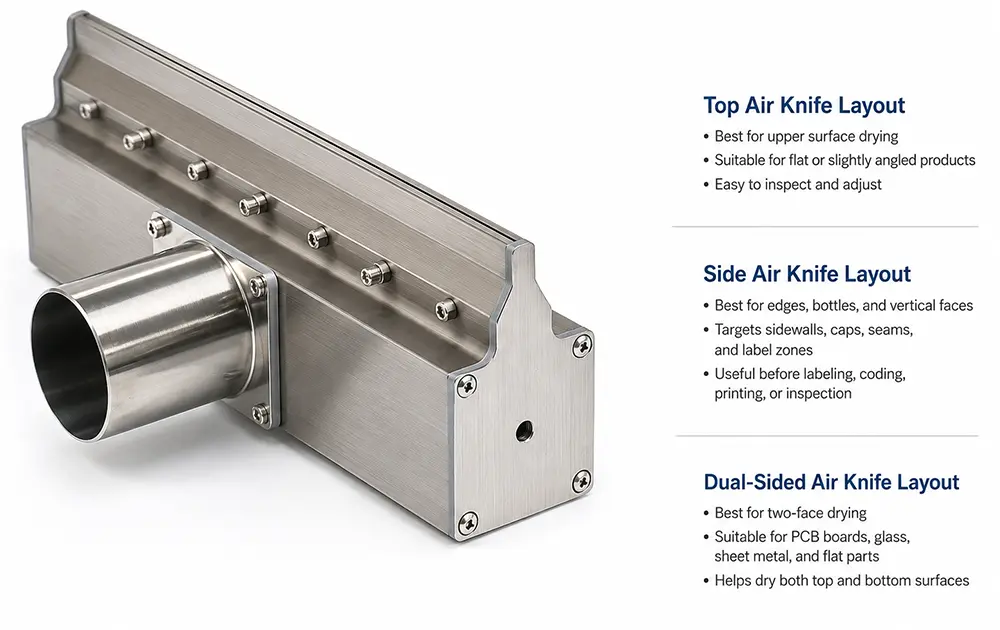
A disposição das lâminas de ar não é apenas uma escolha de montagem. Ela determina onde o ar incide, para onde a água ou os detritos se movem e se o produto está realmente seco antes do próximo processo. Uma lâ...
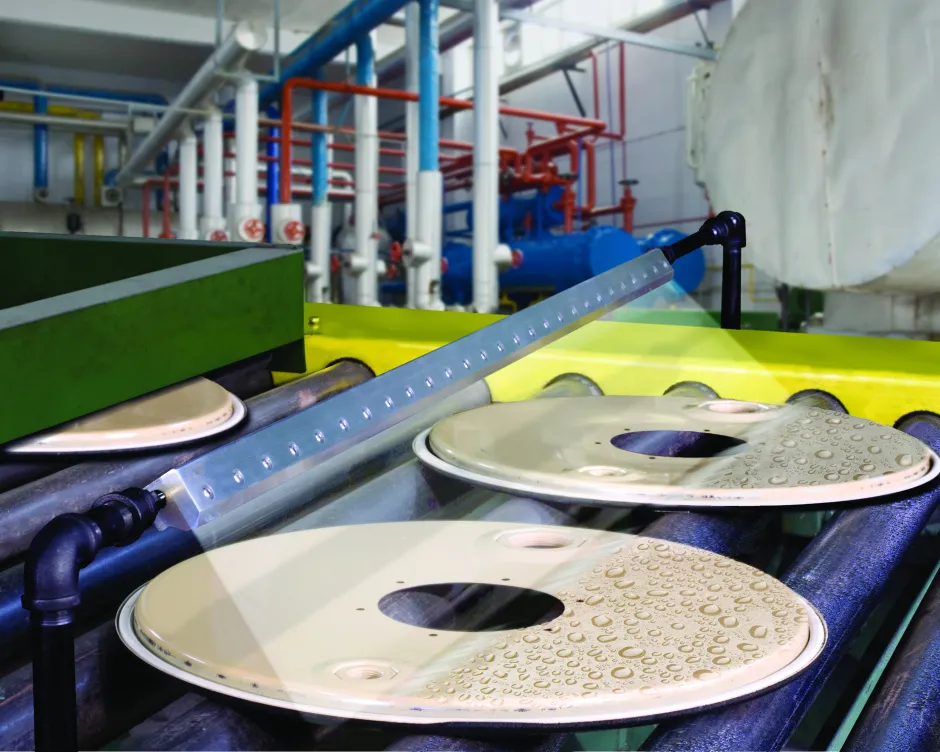
Muitos compradores focam-se primeiro no comprimento da lâmina de ar, no tamanho do soprador ou na largura da abertura. Esses fatores são importantes. Mas, numa linha de produção real,oângulo da lâmina de arpode...
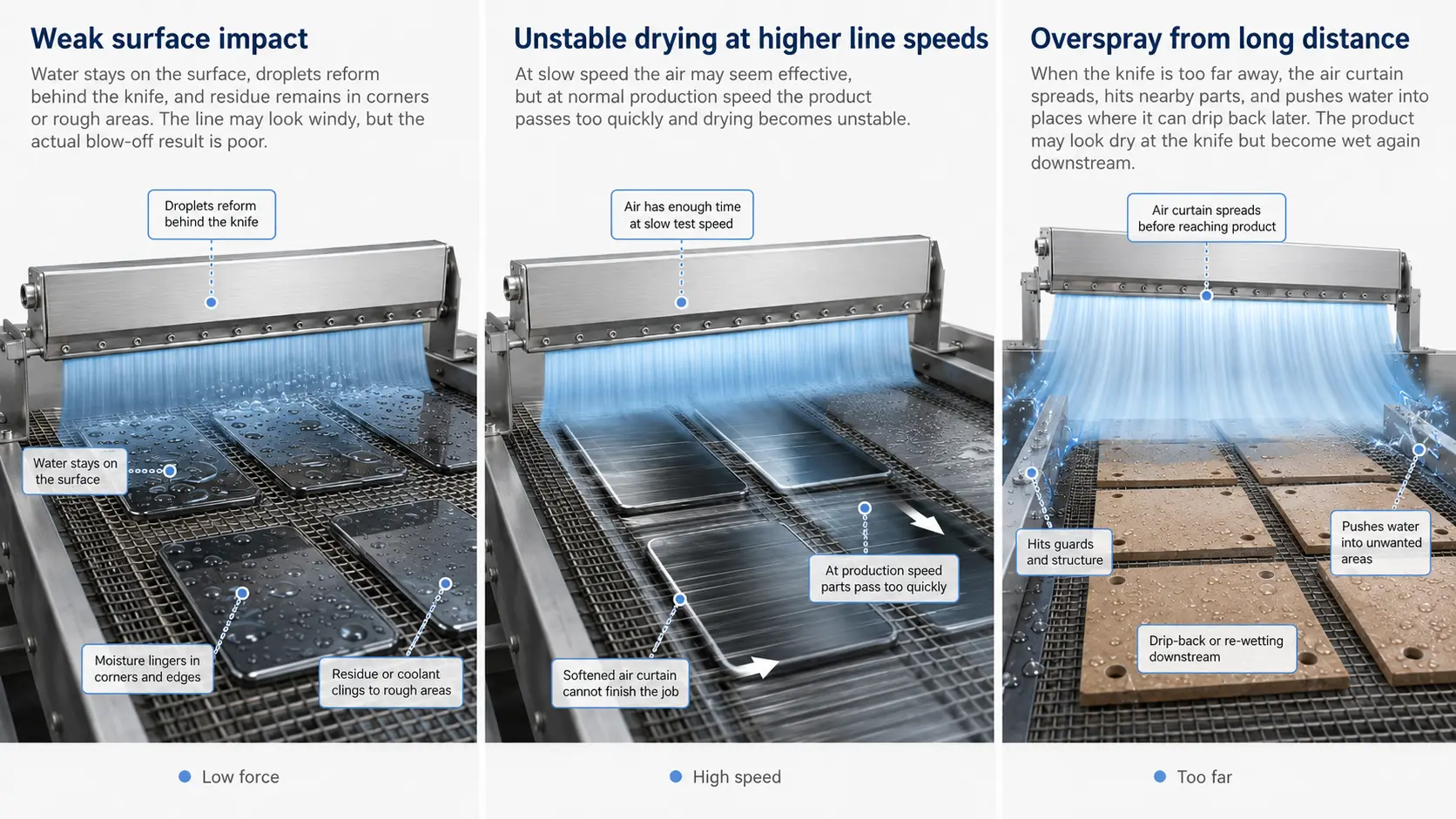
A distância de montagem da lâmina de aré um dos ajustes mais fáceis de negligenciar. A lâmina pode ter o comprimento correto. O soprador pode ser potente o suficiente. A largura da fenda pode ser adequada. Mas ...
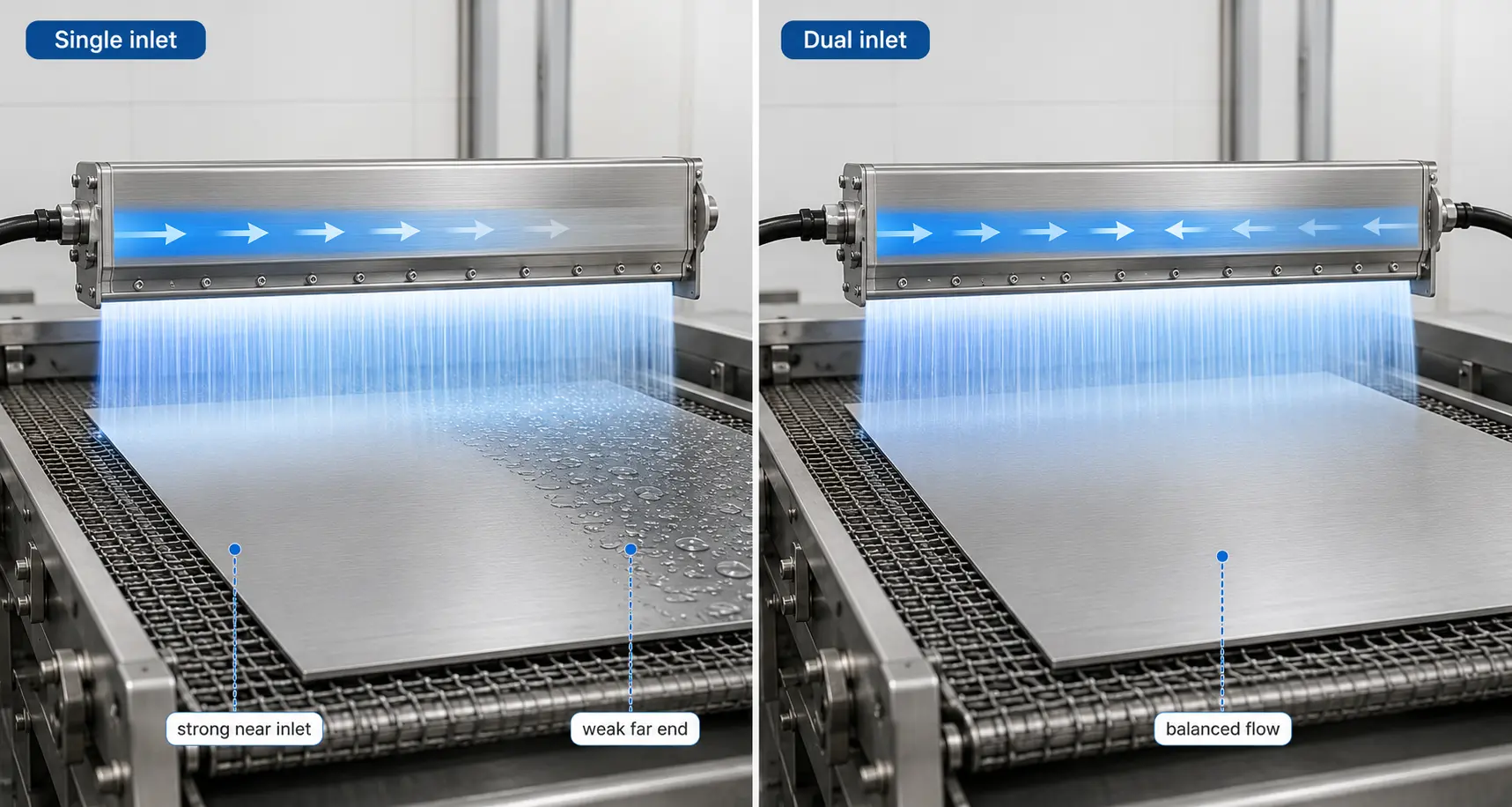
Umafaca de arque não seja muito potente nem sempre é pequena demais. O problema geralmente está na entrada de ar. Para lâminas curtas, uma única entrada pode ser suficiente para preencher todo o espaço interno....
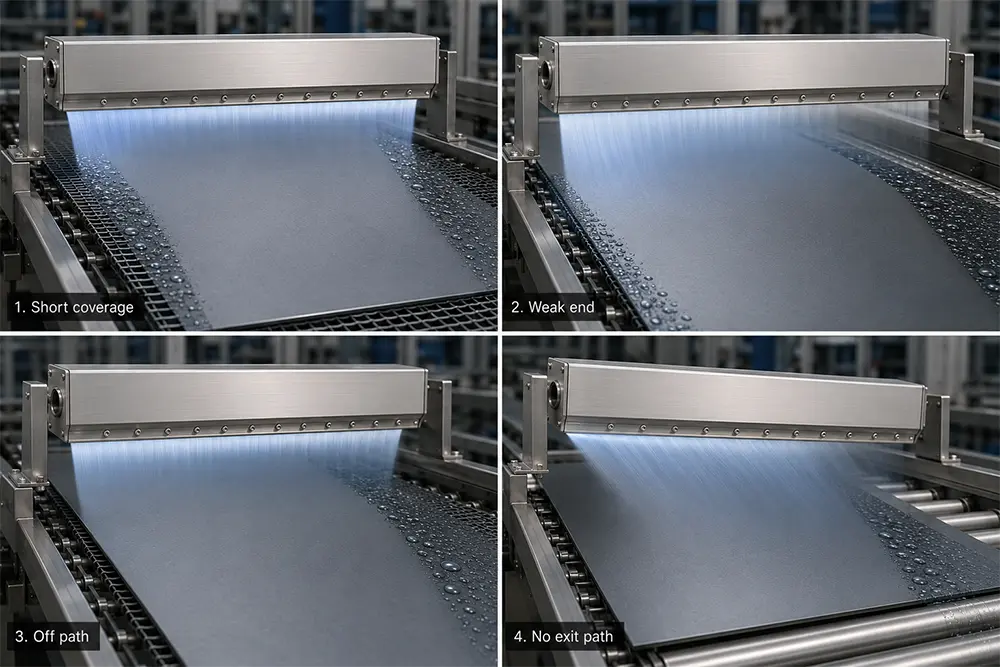
Em uma esteira estreita, o comprimentoda lâmina de argeralmente é fácil de determinar. A lâmina cobre o produto, o suporte tem espaço suficiente e o operador consegue visualizar o resultado da secagem em toda a...
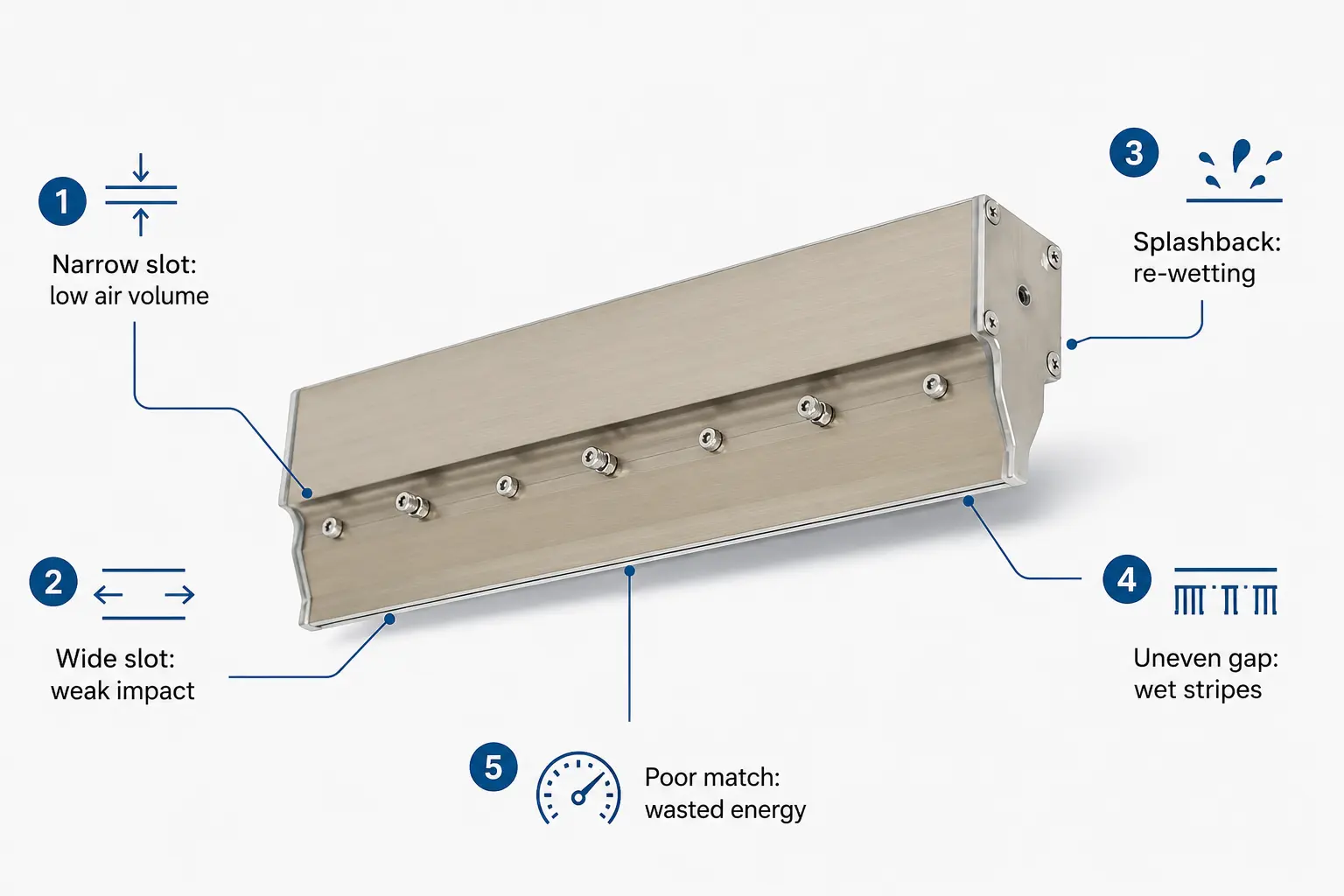
A largura da abertura da lâmina de ar pode parecer um detalhe pequeno. Na produção real, ela pode determinar se a linha seca completamente ou se deixa para trás água, poeira, fluido refrigerante ou resíduos de ...
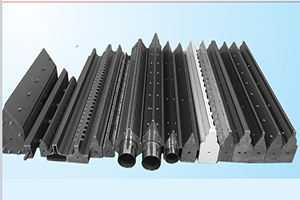
Um bom projeto de lâmina de ar começa na linha de produção, não com um formato fixo de catálogo. Uma linha de limpeza de PCBs, uma linha de embalagem de alimentos, uma estação de secagem de garrafas, uma linha ...

Shenzhen Qixingyuan Machinery Equipment Co., LTD.
info@airknifecn.com
Edifício 8, Terceira Zona Industrial de Wanfeng, Rua Xinqiao, Distrito de Bao'an, Shenzhen, Guangdong, China